
Managed Infrastructure
Office, IT, Manpower, and Utilities
Managed Infrastructure
Office, IT, Manpower, and Utilities
Managed Infrastructure refers to outsourcing the management of various aspects of an organization’s infrastructure to external service providers. These services can encompass office management, IT infrastructure, manpower(human resources), and utilities. By leveraging managed services, companies can streamline their operations, reduce costs, ensure compliance, and focus on their core competencies.
Here’s a detailed look into each area of managed infrastructure, along with their major advantages in terms of compliance, operations, and business growth.
Managed Infrastructure refers to outsourcing the management of various aspects of an organization’s infrastructure to external service providers. These services can encompass office management, IT infrastructure, manpower(human resources), and utilities. By leveraging managed services, companies can streamline their operations, reduce costs, ensure compliance, and focus on their core competencies.
Here’s a detailed look into each area of managed infrastructure, along with their major advantages in terms of compliance, operations, and business growth.
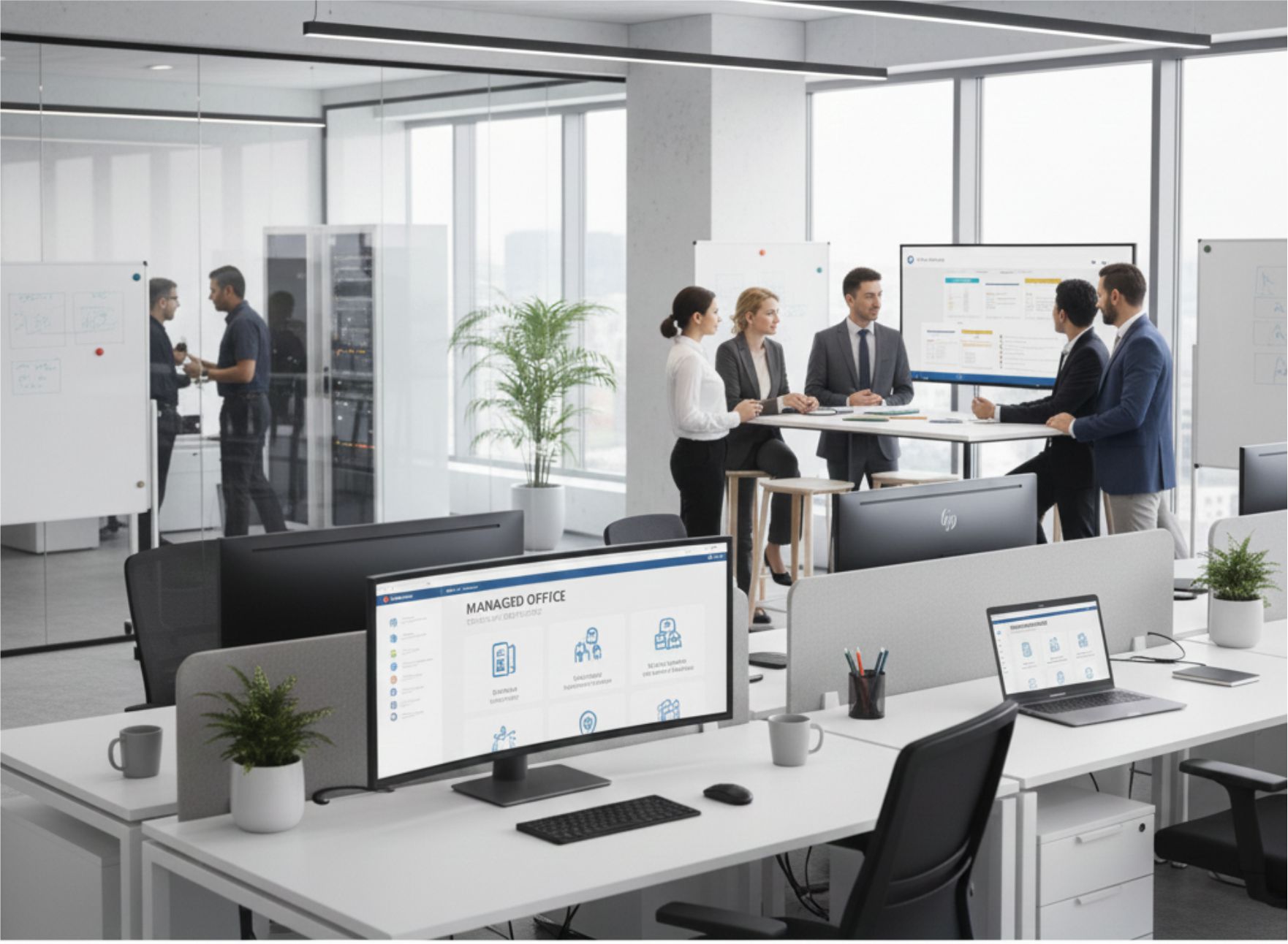
Managed Office Infrastructure
Managed office infrastructure involves outsourcing tasks related to office space, furnishings, equipment, and facilities management to specialized providers. This allows companies to focus on their core business activities without worrying about the logistics of office operations.
Key Components:
Advantages:

Managed IT Infrastructure
Managed IT infrastructure involves outsourcing the management of hardware, software, network services, cybersecurity, and IT support functions to specialized firms. This allows organizations to ensure that their IT systems run smoothly, securely, and efficiently.
Key Components:
Advantages:

Managed Manpower (Human Resources)
Managed manpower services involve outsourcing workforce-related tasks, including recruitment, staffing, payroll management, and employee benefits administration. This enables companies to focus on their strategic goals while relying on external experts to handle day-to-day HR operations.
Key Components:
Advantages:

Managed Utilities
Managed utilities refer to outsourcing the management and optimization of utility services such as electricity, water, gas, and waste management. Service providers ensure that these critical functions are efficient, cost-effective, and compliant with local regulations.
Key Components:
Advantages:
Managed Office Infrastructure
Managed office infrastructure involves outsourcing tasks related to office space, furnishings, equipment, and facilities management to specialized providers. This allows companies to focus on their core business activities without worrying about the logistics of office operations.
Key Components:
Advantages:
Managed IT Infrastructure
Managed IT infrastructure involves outsourcing the management of hardware, software, network services, cybersecurity, and IT support functions to specialized firms. This allows organizations to ensure that their IT systems run smoothly, securely, and efficiently.
Key Components:
Advantages:
Managed Manpower (Human Resources)
Managed manpower services involve outsourcing workforce-related tasks, including recruitment, staffing, payroll management, and employee benefits administration. This enables companies to focus on their strategic goals while relying on external experts to handle day-to-day HR operations.
Key Components:
Advantages:
Managed Utilities
Managed utilities refer to outsourcing the management and optimization of utility services such as electricity, water, gas, and waste management. Service providers ensure that these critical functions are efficient, cost-effective, and compliant with local regulations.
Key Components:
Advantages:
Major Advantages of Managed Infrastructure Services
Compliance
Managed services providers ensure that all infrastructure aspects (office, IT, manpower, utilities) meet local and global regulations. For example, in IT, they can manage compliance with cybersecurity laws, while in utilities, they can ensure adherence to environmental standards. This reduces the risk of legal issues and penalties for non-compliance.
Operational Efficiency
Outsourcing management to experts in each domain allows organizations to focus on their core business functions. Managed services providers bring specialized knowledge and experience, ensuring that each aspect of the infrastructure runs optimally, often with greater efficiency than in-house management.
Cost-Effectiveness
Managed services reduce the need for large capital investments in infrastructure, technology, and personnel. By leveraging economies of scale, service providers can offer cost-effective solutions, ultimately reducing operational costs. Organizations also avoid the costs of maintaining internal teams or buying expensive equipment.
Focus on Core Business
By outsourcing non-core functions such as HR, IT infrastructure, office management, and utilities, companies can focus on innovation, strategy, and growth, which are key to maintaining competitiveness in the market.
Scalability and Flexibility
Managed infrastructure services allow businesses to scale up or down based on their needs. As companies grow, their managed services provider can easily accommodate increased demands without the company needing to make large investments or overcommit resources.
Improved Risk Management
Outsourcing critical services to professionals mitigates risks associated with data breaches, compliance violations, or utility disruptions. Providers are equipped with risk management frameworks and technologies to minimize these risks, offering businesses peace of mind.
Conclusion
Managed infrastructure services across office, IT, manpower, and utilitiesprovide businesses with numerous benefits in terms of compliance, operational efficiency, and cost savings. By outsourcing these essential functions, organizations can focus on growth, innovation, and strategic goals while ensuring that their infrastructure is well-managed, secure, and compliant with regulations.
Major Advantages of Managed Infrastructure Services
Compliance
Managed services providers ensure that all infrastructure aspects (office, IT, manpower, utilities) meet local and global regulations. For example, in IT, they can manage compliance with cybersecurity laws, while in utilities, they can ensure adherence to environmental standards. This reduces the risk of legal issues and penalties for non-compliance.
Operational Efficiency
Outsourcing management to experts in each domain allows organizations to focus on their core business functions. Managed services providers bring specialized knowledge and experience, ensuring that each aspect of the infrastructure runs optimally, often with greater efficiency than in-house management.
Cost-Effectiveness
Managed services reduce the need for large capital investments in infrastructure, technology, and personnel. By leveraging economies of scale, service providers can offer cost-effective solutions, ultimately reducing operational costs. Organizations also avoid the costs of maintaining internal teams or buying expensive equipment.
Focus on Core Business
By outsourcing non-core functions such as HR, IT infrastructure, office management, and utilities, companies can focus on innovation, strategy, and growth, which are key to maintaining competitiveness in the market.
Scalability and Flexibility
Managed infrastructure services allow businesses to scale up or down based on their needs. As companies grow, their managed services provider can easily accommodate increased demands without the company needing to make large investments or overcommit resources.
Improved Risk Management
Outsourcing critical services to professionals mitigates risks associated with data breaches, compliance violations, or utility disruptions. Providers are equipped with risk management frameworks and technologies to minimize these risks, offering businesses peace of mind.
Conclusion
Managed infrastructure services across office, IT, manpower, and utilitiesprovide businesses with numerous benefits in terms of compliance, operational efficiency, and cost savings. By outsourcing these essential functions, organizations can focus on growth, innovation, and strategic goals while ensuring that their infrastructure is well-managed, secure, and compliant with regulations.